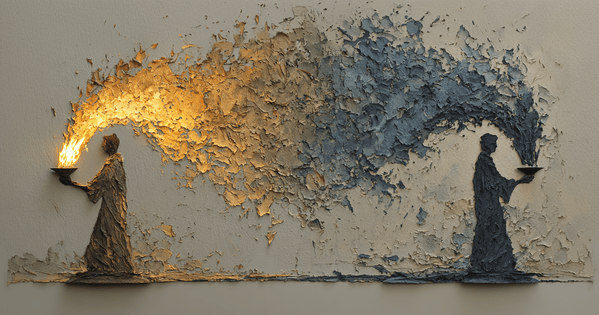
The Duverger Syndrome is democracies' most critical illness. Both the causes and the fixes are known. Solutions must be applied as a matter of priority.
Every previous symptom in the Duverger Syndrome is a dysfunction that operates within a democratic system. Adversarial Politics turns political competition into zero-sum warfare. The Policy Pendulum wastes accumulated policy. The Realignment Trap exhausts democratic hope. The Authoritarian Advantage converts domestic instability into geopolitical vulnerability. These are serious, compounding pathologies — but they leave the democratic system itself intact as the shared premise on which all political competition rests. The cure, however difficult, remains conceivable from within.
Democracy Itself as Wedge Issue is different in kind. It does not merely degrade democracy — it puts its survival on the ballot. And it does so in the most dangerous possible way: not through an open assault that citizens can recognise and resist, but through a fog of competing claims that leaves the electorate unable to identify the real threat. When both sides are simultaneously declaring that they alone are defending democracy and that the other side is destroying it, the immune response is not mobilised. It is paralysed.
This is not a theoretical risk at the end of a long chain of reasoning. It is a description of where several democracies stand today. The patient is already in the ICU.
The preceding symptoms — Party Over Country, Primary Radicalisation, the Authoritarian Advantage — have by this stage produced a political culture in which one camp has both the incentive and the means to entrench itself beyond the reach of normal electoral correction. The process begins quietly. Voter eligibility requirements are tightened, framed as "election integrity." Electoral boundaries are drawn to produce outcomes misaligned with the actual distribution of votes, framed as "fair representation." Judicial appointments are accelerated, oversight bodies weakened, security commitments resisted — each framed in the vocabulary of democratic principle. Each individual measure is deniable. The cumulative direction is toward a system that is nominally democratic but structurally tilted.
When the erosion becomes visible enough, the genuinely pro-democratic camp responds by making democracy itself the central issue: the institutions are at risk, this election is unlike any before it, democracy itself is on the ballot. The warning is not cynical — the threat is real. But the framing has an unavoidable structural consequence: it associates democracy defence with a partisan identity. "Protecting democracy" becomes one team's slogan.
No political movement can afford to run against democracy. The opposing camp therefore does not reject the frame — it inverts it. We are the real democrats. They are the actual authoritarians. Our leader represents the genuine will of the people; their institutions are the rigged machinery of a self-serving elite. The elections we lost were stolen; the elections we won were legitimate. Democracy is not abandoned as a value — it is redefined, weaponised, and turned back on its defenders. Projection replaces argument.
The electorate now receives two mutually incompatible signals, both delivered in the vocabulary of democratic defence. The genuine pro-democratic camp's warnings are indistinguishable, to the confused voter, from ordinary partisan noise — because both sound identical in form. The inverted camp's projections provide rhetorical cover for its own supporters and sow doubt among the undecided. The shared premise — that there is a fact of the matter about who is defending democracy — dissolves. Citizens cannot easily navigate through the fog to the underlying institutional reality.
Institutional erosion does not require public support. It requires only that public attention be sufficiently divided, confused, or exhausted to prevent organised resistance. The fog created by competing democratic claims is precisely calibrated — whether by design or as a structural by-product of the binary — to produce that division. By the time the cumulative damage becomes undeniable, the institutions that would provide self-correction have already been weakened. The immune response has not been defeated in open battle. It has been confused into inaction.
The American case did not begin with anyone declaring opposition to democracy. It began with the patient accumulation of structural advantages framed, in every instance, as democratic improvements. Republican-controlled state legislatures implemented voter identification requirements, conducted voter roll purges, restricted early voting periods, reduced polling locations in high-density Democratic areas, and drew congressional districts whose outcomes diverged significantly from the actual distribution of votes — each measure carried out under the banner of "election integrity," "one person, one vote," and "protecting the democratic process." The language was impeccable. The cumulative direction was toward a system harder to dislodge through elections than its democratic form suggested. No single step was indefensible in isolation. The direction was unmistakable in aggregate.
The "rigged election" template was road-tested before it was deployed at scale. When Donald Trump lost the Iowa caucuses to Ted Cruz in early 2016, his immediate response was an accusation of fraud — not a concession. The claim was specific, unprovable, and retracted only under pressure. It established a pattern: electoral defeat was not a legitimate outcome but evidence of a conspiracy against him. Later that year, Trump declared ahead of the general election that the vote would be "rigged" if he lost — and abandoned the claim entirely when he won. The template had been tested and filed away for future use.
The years that followed saw the polarisation deepen. "Defending democracy" became unambiguously Democratic Party language. The binary sorted positions: if one camp owned democracy, the other camp had to contest the frame. The inversion that would fully emerge in 2020 was already structurally underway.
The template deployed at full scale in 2020. The claim that a legitimate election had been stolen — made by the losing candidate, amplified through his party, and accepted as true by a large fraction of his voters — is projection at its most complete. "Stop the Steal" became the rallying cry for an attempt to stop the count. The accusation of democratic fraud served as the cover story for the attempt to commit it. Sixty-plus court cases found no credible evidence of fraud. The fog had become so thick that millions of citizens could not distinguish the theft from the accusation.
On January 6, 2021, a mob incited by the outgoing president attacked the United States Capitol to prevent the certification of his successor's electoral victory. The Vice President was pressured to refuse certification. Members of Congress were forced to evacuate under threat. The certification was completed that night — but a threshold had been crossed. Institutional destruction was no longer hypothetical. It had been attempted, in public, in the name of democracy.
The fog immediately went to work. A significant portion of Republican voters described the assault as a legitimate protest, a false flag, or a media fabrication. Those who had organised it were reframed as political prisoners. The event that most clearly demonstrated the stakes was simultaneously reprocessed as evidence of the other camp's bad faith. The immune response that January 6 should have triggered was suppressed by the same mechanism it had been designed to expose.
The criminal prosecution of a former president for attempting to overturn an election was, in itself, unprecedented — and the hesitation it produced was fatal to the democratic immune response. The Department of Justice, acutely conscious of the appearance of political motivation, moved slowly. By the time indictments were filed, the trial calendar could not clear before election day. The defendant's strategy — legal delays, disqualification motions, appeals, venue challenges — was designed not to prevail in court but to run the clock. It succeeded.
A separate conviction on felony charges was secured — but the sentence, following his election victory, was suspended. The prosecution had come. It had not stopped him. And throughout, the "political persecution" narrative had saturated the information space: every charge was evidence of the opposing side's weaponisation of justice, every courtroom appearance a campaign rally. The democratic accountability mechanism had been converted, through the fog, into proof of victimhood.
There was no mask to slip. Donald Trump had never concealed his admiration for the world's strongmen — Kim Jong-un, Vladimir Putin, Viktor Orbán, Xi Jinping — praising them publicly and repeatedly across both terms in office. He stated his intentions openly: to purge career civil servants, to direct the justice system against political opponents, to pardon allies, to govern by executive order where legislatures would not comply. These were not campaign metaphors. They were statements of intent, delivered in plain language, to large audiences who applauded them.
The blueprint was also published in advance. Project 2025 — a detailed policy document produced by the Heritage Foundation and allied organisations before the 2024 election — described precisely how a returning administration would dismantle civil service protections, concentrate executive authority, and reshape the federal government from within. Trump publicly distanced himself from the document during the campaign, calculating that its explicitness was an electoral liability. Once elected, he implemented it with precision. It had not been a secret. It had been a published plan.
Among his most committed supporters, the choice was explicit and enthusiastic. When asked to choose between a democratic president from the opposing party and a dictatorial Trump, a substantial portion chose the dictatorship without hesitation. The tribal identity had absorbed the authoritarian conclusion. The fog had done its work — not by hiding what was at stake, but by making it acceptable.
Taiwan's democratisation in the 1990s was one of the twentieth century's most remarkable peaceful transitions. But the democracy it produced inherited a pre-existing fault line: the Democratic Progressive Party (DPP) had emerged from the dangwai (黨外) opposition movement as the party of Taiwanese identity and sovereignty; the Kuomintang (KMT) was the former authoritarian party that had ruled Taiwan for four decades and democratised, ultimately, under domestic and international pressure. The fault line predated the People's Republic of China as the dominant issue. The binary arrived pre-loaded — equipped from the outset to sort security questions along partisan lines.
The 2000 and 2004 presidential elections were a textbook manifestation of Duverger's Law in action: the mechanics of single-choice voting driving voters toward exactly two viable options, producing the conditions under which the democratic premise itself would become contested terrain. The case is documented in the Taiwan 2000 and 2004 presidential elections article within the Duverger Framework.
The clearest early instance arrived in 2004. The DPP organised the 228 Hand-in-Hand Rally — a human chain stretching across Taiwan in symbolic opposition to the People's Republic of China's missile deployments aimed at the island. The KMT declined to join.
The act of standing in physical opposition to a specific, documented military threat had become partisan. The structural consequence was lasting: from that moment, any security measure aligned with resistance to PRC military or political pressure would be coded green — in Taiwan's political colour system, green identifies with the DPP and Taiwanese sovereignty, while blue identifies with the KMT and a more accommodationist cross-strait stance. Security had become one team's language. Any opposition to a security measure would be coded blue, regardless of what the measure actually defended against. The binary had sorted a security posture. The fog was seeded.
The presidency of Ma Ying-jeou (馬英九, KMT, 2008–2016) tested the opposite pole. The ECFA trade agreement and the 92 Consensus framework repositioned the KMT as the party of cross-strait engagement — framed by its supporters as pragmatic peace management, experienced by its opponents as strategic vulnerability to an authoritarian neighbour. Neither characterisation was entirely wrong. Both became team positions, sorted by the binary.
The Sunflower Movement of 2014 was the democratic mobilisation against the Cross-Strait Service Trade Agreement, which protesters argued would deepen Taiwan's economic dependency on the People's Republic of China in ways that could not easily be reversed. Students and civil society occupied the legislature. The movement was overwhelmingly DPP-sympathetic. Democracy was mobilising — but it was mobilising on one side of the binary. The other side experienced it not as democratic expression but as partisan pressure dressed in civic language. Both readings were, structurally, partially accurate.
DPP governance consolidated Taiwan identity and PRC-threat framing as the central axis of Taiwanese politics. The Kuomintang could not concede that frame without conceding the moral and electoral high ground. The counter-claim crystallised: the DPP is the real authoritarian; President Lai Ching-te is the greater threat to democracy; it is DPP provocation that endangers cross-strait peace; the People's Republic of China's intentions are manageable through dialogue.
The projection took its clearest personal form when KMT Chairwoman Zheng Li-wen (鄭麗文) was asked publicly whether Vladimir Putin — who had invaded a sovereign European democracy — is a dictator. Her answer was no. The reaction within her own camp was mixed. But the characterisation of President Lai Ching-te as the greater authoritarian threat to Taiwan's democracy is not an individual position: it is the party's strategic frame, sustained consistently across leadership statements, legislative manoeuvres, and media messaging. The projection is precisely calibrated. It does not reject democracy as a value. It redefines it, applies it to the wrong target, and leaves the electorate in the fog. Both sides now claim democracy. Neither says it opposes it. The shared premise has dissolved.
On defence: budgets have been blocked or reduced through legislative obstruction. Arms purchase approvals have stalled. Security legislation has been delayed or amended beyond effectiveness. When defending the Republic of China against the People's Republic of China is coded as a green partisan position, voting against defence measures becomes an act of blue identity — the binary logic operates independently of what those measures actually defend against.
On oversight: there have been sustained legislative calls to abolish the Control Yuan, Taiwan's independent oversight body responsible for investigating government misconduct. Abolition would remove a critical institutional check on executive power. The Pildem Framework proposes the opposite: strengthen and depoliticise the Control Yuan, insulating it further from partisan capture — precisely the reform a democracy under pressure requires.
On electoral institutions: proposals have been advanced to extend absentee voting to Republic of China citizens residing in the People's Republic of China — allowing them to cast their ballots from the mainland, with all the security and political pressure implications this entails — as well as to shorten the citizenship path for mainland Chinese spouses. Each proposal is framed in the language of democratic inclusion. Each also introduces friction into the electoral system and expands potential participation by populations exposed to sustained CCP influence. This is not coincidence. It is the operational layer of a strategy that has its own name.
The People's Republic of China's approach to Taiwan has evolved as each successive strategy has reached its limits. 武統 — unification by force — remains officially on the table but carries costs the CCP has so far been unwilling to pay: military risk, economic consequences, international response. 和統 — peaceful unification through inducement, economic integration, and the 92 Consensus framework — has failed to gain sufficient traction. Decades of engagement have not produced the political convergence the CCP sought; Taiwan's democratic identity has, if anything, strengthened under pressure.
The third strategy — 內統 — is different in kind. It does not attempt to win the argument for reunification. It attempts to activate the structural vulnerabilities of Taiwan's democratic system from within. 內統 is the purposeful deployment of both the Duverger Syndrome and the Tweed Syndrome inside Taiwanese society — deepening the partisan binary, capturing institutions, financing sympathetic media, cultivating elite relationships, amplifying disinformation — with active facilitation from behind by CCP-linked actors. The People's Republic of China does not need to defeat Taiwan militarily if the binary structure of Taiwanese politics can be reliably counted upon to prevent Taiwan from organising its own defence. The fog is not a side effect of the CCP's Taiwan strategy. Under 內統, it is the strategy.
The fog has real victims, and they deserve to be named without condescension.
Many Taiwanese voters — exposed to years of pro-KMT and CCP-aligned media narratives — genuinely believe that the Democratic Progressive Party and President Lai represent the primary threat to Taiwan's stability. They have been told, repeatedly and through trusted channels, that it is DPP governance that is authoritarian, that the cross-strait situation would be manageable under different leadership, and that the warnings about PRC intentions are partisan fearmongering designed to win elections. These are not foolish people. They are people navigating a deliberately manufactured information environment.
Many have minimised, or never fully encountered, the realities of life under CCP rule: the surveillance infrastructure, the suppression of dissent, the absence of an independent judiciary, the party's absolute claim on every sphere of life. The distance between what they have been told and what the evidence shows is not their failure. It is the measure of how effectively the fog has penetrated.
Many are tired of democracy — experienced as perpetually quarrelsome, slow to deliver material improvements, and consumed by political conflict that seems to benefit politicians more than citizens. The desire for a government that simply governs, rather than fights, is a human response to a genuinely dysfunctional system. It deserves respect, not dismissal — and it points directly to the structural failure that the Duverger Syndrome produces.
And many hold a quieter, more resigned belief: that life under PRC rule would not be so radically different. That the struggle to afford housing, to raise children, to find economic security in a city that has grown beyond their reach — all of this would continue, just under a different flag. This is the most painful form the fog takes, because it contains a grain of legitimate grievance. Taiwan's government has not solved the housing crisis, or wage stagnation, or generational economic anxiety. Those failures are real. The tragedy is that the binary offers no way to hold a government accountable for them without simultaneously casting a structural vote for the alternative.
The independence/reunification debate, as it is commonly framed, rests on premises that do not survive examination.
The Republic of China has never been part of the People's Republic of China. Taiwan has never been under PRC control. Whatever the complexities of post-war history and international recognition, the political and legal reality is that two entirely separate governments have governed two entirely separate territories, continuously, for over seven decades. The concept of "reunification" presupposes a prior unity that, in any meaningful political sense, has never existed.
The second false premise is that this is a question between two Chinese-speaking communities about the nature of their political relationship. It is not. It is a question between democracy and authoritarianism. The people of mainland China — living under a one-party state with no independent judiciary, no free press, no right to organise, and no peaceful mechanism for removing their government — deserve freedom and democratic self-determination as fully as the people of Taiwan do. They are not the adversary. They are the largest democracy-deficit in human history.
Taiwan's role is not to resolve the question of cross-strait relations on the CCP's terms or timeline. It is to protect its own democracy with everything it has — its institutions, its military capacity, its international relationships, its civic culture — for as long as necessary. Until the day when the people of China can freely choose their own government and freely express their own political will, no meaningful negotiation between equals is possible. When that day comes, the people on both sides of the Strait can decide together — without coercion, without military threat, without CCP mediation — what kind of relationship, what kind of common market, what kind of political arrangement, if any, they freely wish to build. That is the democratic answer to a question the fog has made appear unanswerable.
The Kuomintang is not the Chinese Communist Party. Most of its voters are not authoritarian. Many hold entirely legitimate grievances against DPP governance: on housing, on wages, on the quality of public services, on the conduct of a party that has held power long enough to accumulate its own failures. A voter who is dissatisfied with DPP domestic policy deserves a genuine alternative — not a forced choice between accepting the DPP platform in its entirety or structurally enabling the position the binary has bundled with the opposing camp.
This is the deepest structural failure that the Duverger Syndrome produces in Taiwan: the absence of real choice at precisely the moment when choosing wrongly carries existential consequences. A voter who cares about Taiwan's security but is angry about housing policy has no home. A voter who supports genuine cross-strait dialogue but opposes the obstruction of defence budgets has no party. The binary converts every election into an all-or-nothing trade.
Under Informed Score Voting, this changes. A voter could give a high score to a candidate who is credible on Taiwan's defence while holding the government to account on economic policy. A candidate could build a coalition that takes the PRC threat seriously and pursues genuine dialogue — without being forced by the binary to choose between those positions. Security would cease to be a team marker because the team structure itself would dissolve. The fog lifts when political positions are no longer forced into two opposing camps that must contest everything the other claims. Taiwan, of all democracies, cannot afford to wait.
Jair Bolsonaro followed the same playbook as Donald Trump with such precision that their campaigns shared tactics, rhetoric, and political consultants. Before the 2022 election, Bolsonaro declared the electronic voting system untrustworthy and announced he would only accept results he won. When he lost by a narrow margin, he did not concede. His supporters established protest camps outside military barracks calling for a coup. On January 8, 2023 — one year to the day after January 6 in Washington — Bolsonaro supporters stormed and ransacked the Presidential Palace, the National Congress, and the Supreme Court in Brasília. The mirror is not coincidental: it is the same playbook, exported. Democratic institutions held. Lula was inaugurated. Brazil is recovering — but remains a demonstration of how close the fog can bring a democracy to collapse.
Hungary is the most thoroughly documented case of completed fog-enabled erosion in a functioning European democracy. Viktor Orbán never campaigned against democracy — he campaigned as democracy, as the defender of the Hungarian nation against globalist elites, Soros-funded NGOs, and Brussels bureaucrats. Under that cover, courts were packed, public media turned to government propaganda, NGOs regulated out of existence, and electoral boundaries redrawn to guarantee supermajorities. Freedom House reclassified Hungary as a "hybrid regime." The fog ran uninterrupted for sixteen years. In April 2026, Péter Magyar's Tisza Party won 141 of 199 seats — a constitutional supermajority — to Fidesz's 52. Hungary is now the first country to demonstrate that democracy-as-wedge erosion can be reversed through electoral means after deep institutional capture. The rehabilitation will be long. The country is still sick — but the patient is out of the ICU.
Law and Justice (PiS) governed Poland 2015–2023, packing the Constitutional Tribunal, altering the Supreme Court's composition, and turning public broadcasting into government messaging — all framed as correcting the post-communist elite's grip on institutions. Donald Tusk's coalition won in October 2023. But the fog had done its work: PiS-appointed judges continued issuing rulings that blocked restoration efforts; the President vetoed reform legislation. Poland is the most instructive current lesson in what recovery actually requires — not just electoral victory but the sustained, legally contested work of restoring institutional independence against the resistance of the captured institutions themselves.
Israel's 2023 judicial overhaul produced a textbook fog: the Netanyahu coalition framed it as restoring democratic accountability over an unelected, self-appointing judicial elite; the opposition framed it as dismantling the only remaining check on executive power. Both sides spoke the language of democracy. Neither said it opposed it. The electorate — highly educated, civically engaged — could not easily resolve competing claims without legal expertise most citizens do not have. The mass protests of 2023 were the largest in Israeli history — but because they were overwhelmingly drawn from one side of the political binary, they were experienced by the other side as factional pressure dressed as civic defence. The overhaul was paused, not abandoned. The fog has not lifted.
The Israel case is a reminder that democratic erosion is never only an institutional problem. Populist governance enabled by the fog has consequences for populations far beyond the country's borders. The war on Gaza — and the military escalation toward Iran, conducted in close alignment with Donald Trump — have produced a humanitarian catastrophe of historic proportions: tens of thousands of deaths, the systematic destruction of civilian infrastructure, and a generation of children in Gaza losing language itself to trauma. The democratic fog that shields Netanyahu's governing coalition from domestic accountability does not stay within Israel's borders. It travels, lethally, into the lives of others.
Marine Le Pen's Rassemblement National has not denied electoral results or stormed institutions. It has pursued institutional power through electoral means, with deliberate moderation designed to make it electorally credible. The fog is nevertheless forming: a significant fraction of French voters now experience opposition to the RN as itself anti-democratic — as the establishment protecting itself against the popular will. The inversion is structurally underway, even if it has not yet reached the depth of the US or Brazilian case. France's republican traditions, the Constitutional Council, and the two-round runoff provide resistance. Whether those immunities hold when and if the RN reaches significant executive power is the open question that 2027 will test.
India's case fits the thematic description but operates through a different structural mechanism. BJP/Modi's framing — Hindu civilizational democracy against Congress secular elitism, the democratic majority expressing its will against Western-influenced institutions — mirrors the democracy-as-wedge pattern. Press freedom has deteriorated; the Supreme Court's independence has been contested; minority rights have been eroded under the cover of majoritarian democratic claims. But India has a genuine multi-party system at the national level; the binary is politically constructed rather than structurally enforced. The 2024 election, in which BJP fell short of a solo majority, suggests the fog has not penetrated as deeply as in structurally binary systems.
Robert Fico's return to power in September 2023 has moved Slovakia rapidly toward the Hungary 2010 template: withdrawal from EU/NATO solidarity on Ukraine, attacks on independent media, framing of the democratic opposition as Soros-funded foreign agents. After surviving an assassination attempt in May 2024, Fico accelerated anti-democratic rhetoric, casting his critics as enemies of the state. The fog mechanism is in place. The institutional capture has not yet reached Hungarian depth. The window for resistance remains open — but the template is clear and the pace is rapid.
Georgia's ruling Georgian Dream passed a "foreign agents" law in 2024 modelled explicitly on Russian legislation, requiring civil society organisations and media receiving more than 20% of their funding from abroad to register as foreign agents — a label with Soviet-era connotations designed to delegitimise independent institutions. Georgian Dream frames the law as protecting Georgian sovereignty against foreign interference; the opposition frames it as dismantling the infrastructure of democratic civil society. Both claim the democratic ground. Georgia's EU candidate status hangs in the balance. The country's pro-EU population is in direct conflict with a government pursuing a pro-Russian trajectory under democratic cover.
Some voters see clearly. They recognise what is happening to democratic institutions — the incremental erosion, the projection, the systematic weakening of oversight and electoral integrity — and they judge it accurately. They vote for the democracy-preserving camp not from tribal loyalty but from a considered analysis of what is actually at stake. They are not naive about the camp they vote for: they know it has its own failures. They vote for it anyway, because they understand that the alternative is not a better government but a different kind of system.
These voters are usually a minority. The fog does not need to deceive everyone — only enough to prevent the clear-eyed minority from prevailing. That is, structurally, a much lower bar.
Many voters hear "democracy is on the ballot" and experience it as one more piece of adversarial noise — because it sounds identical to every piece of adversarial noise that preceded it. Both camps have always claimed that this election is unlike any before it, that the stakes have never been higher, that the other side represents an existential threat. The cry-wolf pattern is real. A voter who has learned to discount escalating rhetoric is applying a rational heuristic.
The fog's success with this voter is structural, not a failure of intelligence. Genuine warnings and partisan rhetoric are, in form, indistinguishable. The skeptic is not wrong that the system produces false alarms. They are wrong only in assuming that this particular alarm is one of them — and the binary system has made it impossible for them to tell the difference.
Some voters are moved by populist messaging and vote against democracy for reasons that feel, to them, like democratic instincts: anger at a corrupt establishment, desire for genuine change, rejection of a political class that has failed them for decades. The strongman's framing — that the real threat to the people is the current system, and that he alone can fix it — resonates because it contains a grain of truth. The system has failed them. The establishment has been self-serving. The desire for something different is legitimate.
The fog's darkest achievement with this voter is converting legitimate grievance into a vote for the thing that will not address it. The authoritarian does not fix the corrupt establishment. He captures it. The voter who wanted to drain the swamp has handed power to someone better positioned to fill it.
This voter is no longer actively pro-democratic — not from ideology, but from fatigue. They have experienced democracy as perpetually quarrelsome, slow to deliver, and consumed by political conflict that seems to benefit professional politicians far more than ordinary citizens. They want a government that governs rather than fights. They want order. They do not necessarily want authoritarianism; they want relief from a system that has exhausted them without rewarding them.
Their exhaustion is not irrational. It is a rational response to a democracy that has consistently failed to deliver on its deepest promise. A genuine democracy — at its sixth level, as the Pildem Framework defines it — would guarantee not merely the right to vote but the embedded capacity to make a decent living and to be free from the chronic anxiety of economic precarity. The democracies that currently exist fall far short of that standard. Their fiscal architecture rests overwhelmingly on labor taxes that burden work while leaving unearned wealth largely untaxed. They have developed no fair share model that distributes the gains of enterprise broadly. Their economic structure generates the pathologies of an exploitation economy — economic injustice, desperation, precarity — that extract from citizens far more than they return. The voter who is tired of democracy is often tired of a democracy that promised dignity and delivered insecurity. They are not wrong about the failure. They are mistaken only about what would remedy it.
Some voters have seen through the fog — and chosen the other side. They actively want the strongman. They are not confused about what is being offered; they understand it and prefer it. In the United States, these are the voters who answered "dictator Trump" when offered the explicit choice, and did so with enthusiasm rather than reluctance. In Taiwan this type is smaller but not absent: those who genuinely believe that stability under the People's Republic of China would be preferable to continued democratic disorder, or who have absorbed a version of history in which authoritarian governance delivered prosperity and order where democracy has delivered only noise.
The fog is not their confusion. For them, the fog is a service — it provides rhetorical cover for a position that could not otherwise be held openly in a democratic society. They do not need to be convinced. They need only the fog to remain thick enough to make their choice look, from the outside, like something other than what it is.
The pattern is structural, not coincidental. Under single-choice voting, every political position must be sorted into one of two camps. Once the survival of democratic institutions becomes a live political issue, the binary converts it into a team marker — not because either camp intends this outcome, but because the sorting mechanism leaves no alternative. The pro-democratic camp raises the issue because the threat is real. The opposing camp cannot concede the issue without conceding the election. The binary forces the inversion. The fog follows from the inversion. The erosion proceeds through the fog.
In a multi-party system, this dynamic is structurally different. A party could exist in Taiwan that takes PRC threats seriously while pursuing genuine cross-strait dialogue — without being forced by binary logic to choose between the two. A party could exist in the United States that advocates limited government and fiscal conservatism without being structurally bundled with attacks on electoral integrity. Voters who care about democratic institutions while holding conservative economic views could find a home without absorbing the authoritarian position the binary has packaged with it. The fog lifts when political positions are not forced into two opposing camps that must each contest everything the other claims.
This is where the Duverger Syndrome and the Tweed Syndrome converge at their most dangerous point. Tweedism — the capture of democratic institutions by a faction willing to corrupt them for factional advantage — requires a political environment in which the corruption can be plausibly denied, projected onto opponents, or reframed as reform. The binary provides exactly that environment. The fog is Tweedism's operating condition. Removing the binary does not merely change how votes are counted. It removes the structural cover under which institutional erosion becomes invisible.
The terminal symptom demands a structural cure because no other kind can reach it. Cultural appeals — "democracy must not become a partisan issue," "we must defend our institutions together" — are accurate observations about the problem, not solutions to it. They are delivered into the fog by the very camp whose credibility the fog was designed to undermine. As long as the binary persists, the camp that genuinely defends democracy will brand it; the camp that brands it will invert; the fog will persist; and the erosion will continue beneath it.
Under Informed Score Voting, the mechanism breaks at the root. A voter can score a candidate highly for their commitment to democratic norms without being forced to accept the entire platform of the camp that has claimed democracy as its brand. A candidate who defends democratic institutions while holding conservative economic positions is no longer compelled to choose between identities. The scoring system rewards candidates who achieve broad cross-partisan support — which structurally rewards those who defend democratic norms in terms that do not reduce to partisan signalling. Democracy ceases to be a team marker because the team structure itself dissolves.
The Duverger Syndrome's twelve symptoms are ordered by causal distance from the root. The earliest are structural — direct outputs of the binary arithmetic. The latest are civilisational — what happens to a democracy that has lived with those outputs long enough. Democracy Itself as Wedge Issue sits at the end of the sequence not because it is the rarest symptom, but because it is the one from which recovery is hardest. Every preceding symptom degrades the democratic system. This one turns the immune response against itself. The cure is the same as for every other symptom — change the arithmetic of the ballot — but the urgency is not the same. The ICU is not the ideal place from which to undertake structural reform. It is, however, where democracy currently has to start.